21/04/2026
In mid-2026 TitlePage will be launching an upgraded platform bringing many enhancements to users. One of the biggest improvements will be a fundamental change in how users can search, explore, and discover titles on TitlePage.
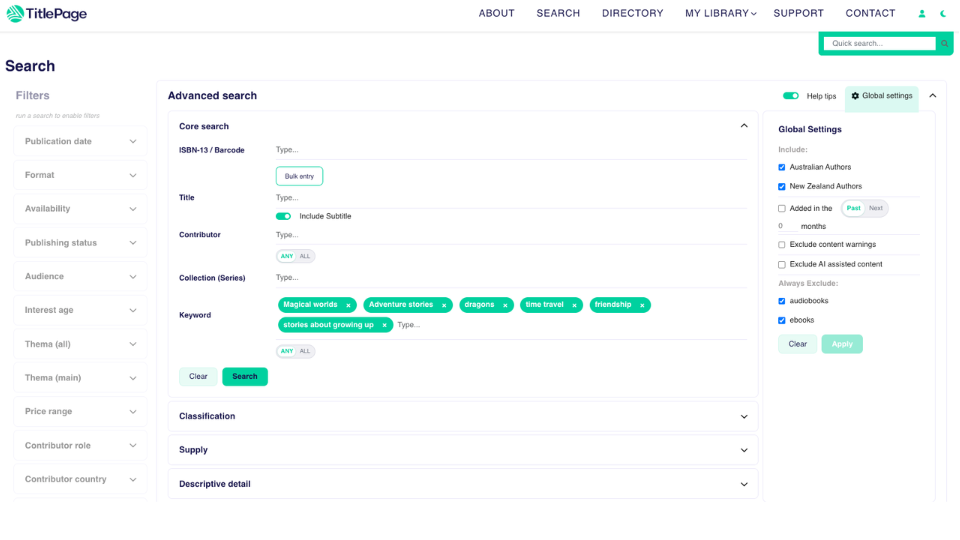
We’re rebuilding not just the interface, offering faster and more accurate search results, but the underlying search engine itself. This more flexible and powerful search lays the foundation for ongoing improvement, continuing to evolve as metadata improves and new capabilities are introduced.
The search interface, results display, and most importantly the underlying search engine have been completely overhauled with Thema as the primary subject classification scheme, plus advanced keyword search functionality to better reflect how users actually search.
Rather than relying on simple keyword matching, the search engine evaluates how well each record matches your search across multiple metadata fields – including title, contributor, subject, and descriptive text. This provides more relevant results, even when searches are broad, partial, or less precise. This approach is designed to reflect how users naturally search, helping them quickly find the most relevant titles across a large and diverse set of metadata from 1.7 million titles.
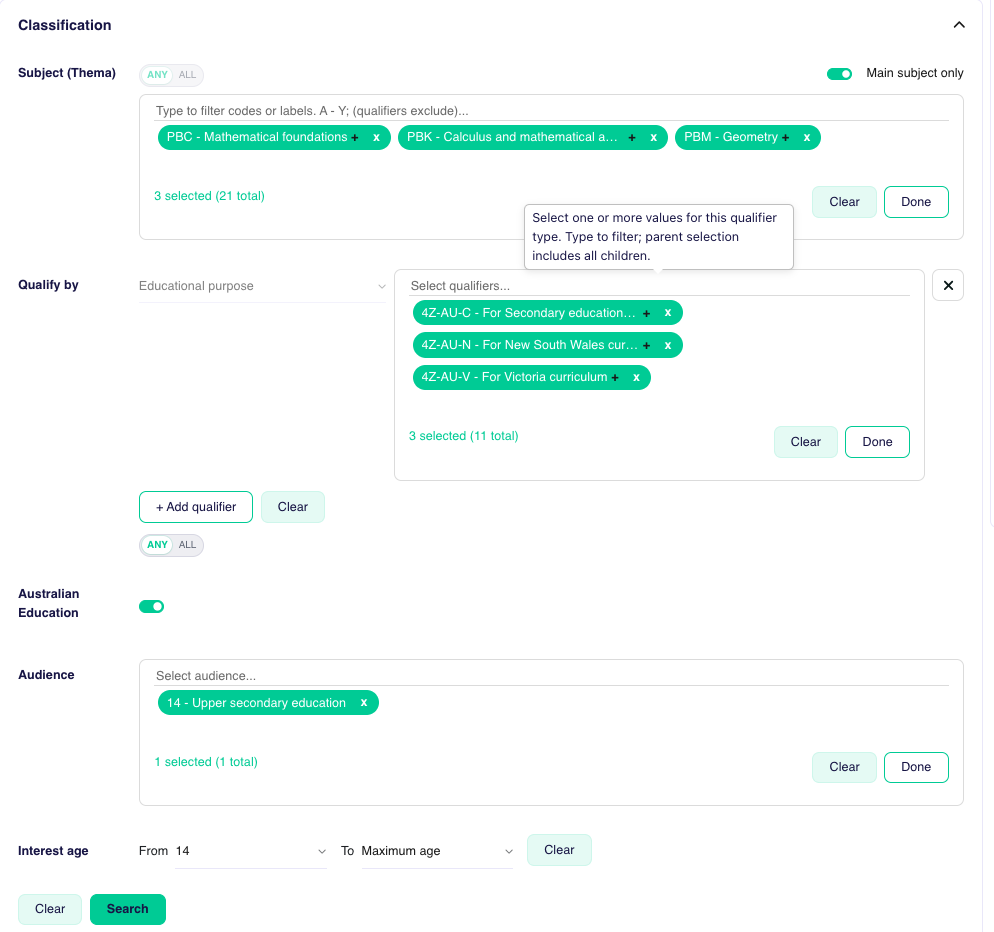
Equally important is that the new search is designed for exploration as well as known item lookup. Rich metadata helps surface related and relevant titles you may not have thought to search for directly, supporting discovery and helping answer customer queries outside your immediate area of expertise. Keywords, audience ranges, and Thema classifications all play a central role in this. As more rich metadata is supplied, search results will continue to improve.
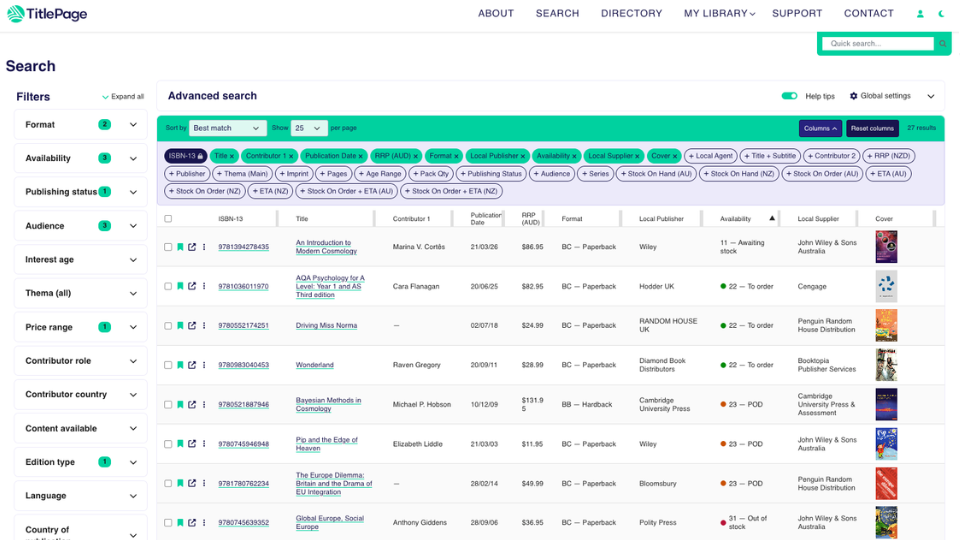
The search results page will show key title information by default, but users can also tailor the display columns to their individual preferences – reducing time to find essential data, with less need to click through to the product display. From the results page you can also quickly save titles to a personal list – this provides a flexible working collection that you can customise, annotate, and use to review and share key product information.
Search enhancements include:
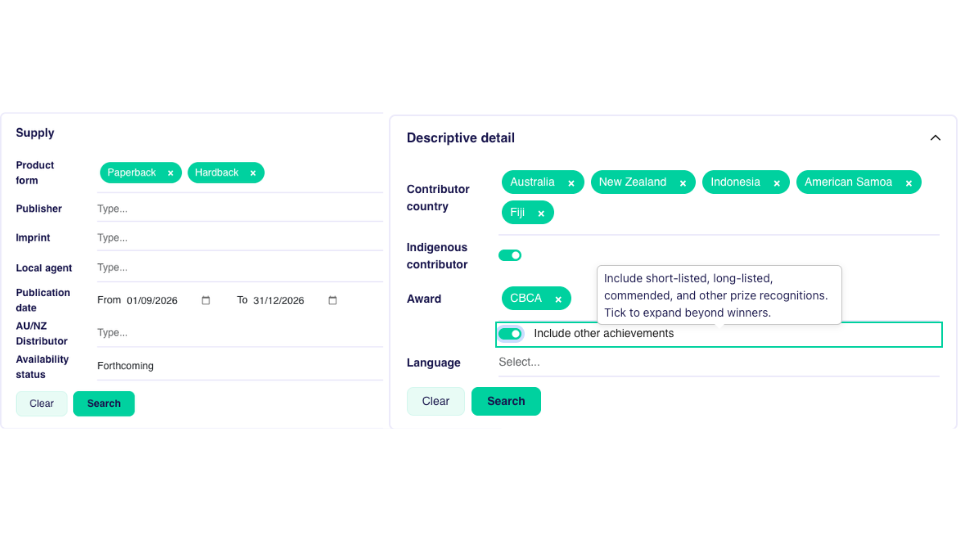
- Advanced search options with more precise filters - such as Thema-based subject search, prize winners, or age ranges.
- Qualify your subject based searches by setting, time period, themes or age and interest groups.
- Customisable search result columns, with dynamic filtering for personalised views.
- Ability to save, annotate, and manage your own collection of titles.
- Easy barcode scanning via device camera on mobile or tablet.
- A more exploratory experience, moving beyond simple lookups to discover related titles, niche topics, and emerging trends.
More information on the upgrade project and search can be found here.
Key search metadata for publishers to focus on
Metadata like keywords, age ranges, and Thema subject classification will play a central role in title discoverability, allowing users to make more exploratory searches on TitlePage.
Advanced search options will allow even greater refinement of the search, while dynamic filters will tailor results further. This presents users with a wealth of new options to explore and discover titles – but only if publishers provide the underlying metadata.
So what do publishers need to do? Beyond the basics of keywords, pricing and availability information, publishers should focus on strengthening metadata in the following areas:
- Thema subject categories and qualifiers: ensure codes are accurate, specific, and supported by relevant qualifiers where appropriate to distinguish your title from countless others in the same top level category.
- Age ranges: support audience targeting and improve filtering for schools, libraries and retailers.
- Contributor information: inclusion of contributor nationality (more on that below) supports users in finding local creators, while the identification of First Nations Creators (where consent has been given) will help surface their work.
- Curriculum alignment: use Thema education qualifiers to link titles to relevant national and state-based learning frameworks.
- Prize information: include award wins and shortlist data to support discovery and promotion.
Find metadata support and advice for improving your Thema on the APA website, with specific articles covering some of the above areas, including: